


 Buy (625 RUB)
Generate QR code
Buy (625 RUB)
Generate QR code
 Open Access
 Subscription or Fee Access
https://doi.org/10.18412/1816-0387-2026-1-24-55
A comparative analysis of studies devoted to the development of technologies for the catalytic copolymerization of CO2 and epoxides to obtain popular polymer products, including polycarbonates and polyurethanes, has been carried out. The use of CO2 as a carbon-containing raw material using these technologies provides the opportunity to obtain market products with high added value. The known catalytic copolymerization systems of CO2 and epoxides, the principles of their functioning, industrial applications and prospects for further commercialization are considered. Information is provided about well-known global companies and their capacities for the production of the polymers in question.
1. Linn J. // Journal of the Association of Environmental and Resource Economists. University of Chicago Press. 2019. V. 6(4). P. 709–740.
2. https://doi. org/10.1086/703887
3. Nair M., Arvin M.B., Pradhan R.P., Bahmani S. // Renewable Energy. 2021. V. 167(C). P. 132–145. https://doi. org/10.1016/j.renene.2020.11.056
4. Technologies for Sustainability and Climate Protection – Chemical Processes and Use of CO2. Edited by Alexis Bazzanella, Dennis Kramer. 2017. 333 p. ISBN 978-3-89746-190-1. DECHEMA.
5. Betts R.A., Jones C.D., Knight J.R., Keeling R.F., Kennedy J.J. // Nat Clim Change. 2016. V. 6(9). P. 806–810. https://doi. org/10.1038/nclimate3063
6. Li X., Li Q., Zhao Y., Kang M., Wang Y. // Journal of Fuel Chemistry and Technology. 2022. V. 50. Issue 2. P. 195–209. https://doi.org/10.1016/S1872-5813(21)60145-7
7. Artz J., Muller T.E., Thenert K., Kleinekorte J., Meys R., Sternberg A., Bardow A., Leitner W. // Chem. Rev. 2018. V. 118. P. 434–504. https://doi.org/10.1021/acs.chemrev.7b00435
8. Vermaas D. // Nat. Catal. 2021. V. 4. P. 913– 914. https://doi.org/10.1038/s41929-021-00716-9
9. Friedlingstein P.O., Sullivan M., Jones M.W., Andrew R.M., Zaehle S. // Earth Syst Sci Data. 2020. V. 12(4). P. 3269–3340. https://doi.org/10.5194/essd-12-3269-2020
10. Global CO2 emissions in 2019. IEA. 2020. Paris. https://www.iea.org/articles/global-co2-emissions-in-2019
11. Ramirez A., Gevers L., Chowdhury A.D., Abou-Hamad E., Aguilar-Tapia A., Hazemann J-L., Wehbe N., Al Abdulghani A.J., Kozlov S.M., Luigi Cavallo L., Gascon J. // ChemCatChem. 2019. V. 11(12). P. 2879–2886. https://doi.org/10.1002/cctc.201900762
12. Ballamine A., Kotni A., Llored J-P, Caillol S. // Sci. Tech. Energ. Transition. 2022. V. 77. Article 1. https://doi.org/10.2516/stet/2021001
13. https://kliimaministeerium.ee/ru/sfery-deyatelnosti/klimat/kiotskiy-protokol
14. https://www.un.org/ru/documents/decl_conv/conventions/kyoto.shtm
15. Sutter J.D., Berlinger J. Final draft of climate deal formally accepted in Paris. CNN. Cable News Network, Turner Broadcasting System, Inc. https://www.academia.edu/36485719/Main_assignment_tunvir_sir_Cop21
16. Crippa M., Guizzardi D., Muntean M., Schaaf E., Solazzo E., Monforti-Ferrario F., Olivier J.G.J., Vignati E. Fossil CO2 emissions of all world countries. Report 2020.09.09. EUR 30358 EN, Publications Office of the European Union, Luxembourg, 2020, ISBN 978-92-76-21515-8. https://doi.org/10.2760/143674
17. Global Energy Review: CO2 Emissions in 2021, in IEA (International Energy Agency): Paris. https://www.iea.org/reports/global-energy-review-CO2- emissions-in-2021-2. 2022
18. Leung D.Y.C., Caramanna G., Maroto-Valer M.M. // Renewable and Sustainable Energy Reviews. 2014. V. 39. P. 426–443. http://doi.org/10.1016/j.rser.2014.07.093
19. Cuéllar-Franca R.M., Azapagic A. // Journal of CO2 Utilization. 2015. V. 9. P. 82–102. http://doi.org/10.1016/j.jcou.2014.12.001
20. Bui M., Adjiman C.S., Bardow A., Anthony E.J., Boston A., Brown S., Fennell P.S., Fuss S., Galindo A., Hackett L.A., Hallett J.P., Herzog H.J., Jackson G., Kemper J., Krevor S., Maitland G.C., Matuszewski M., Metcalfe I.S., Petit C., Puxty G., Reimer J., Reiner D.M., Rubin E.S., Scott S.A., Shah N., Smit B., Trusler J.P.M., Webley P., Wilcox J., Mac Dowell N. // Energy Environ. Sci. 2018. V. 11. P. 1062–1176. http://doi.org/10.1039/C7EE02342A
21. Ghiat I., Al-Ansari T. // Journal of CO2 Utilization. 2021. V. 45. Article 101432. https://doi.org/10.1016/j.jcou.2020.101432
22. Carbon dioxide-based polymers: Turning carbon emissions into plastic. By Karolis Vilcinskas. // Prescounter. Article. March 2020. https://www.prescouter.com/2020/03/carbon-dioxide-based-polymers-turning-carbonemissions-into-plastic/
23. Hepburn C., Adlen E, Beddington J., Carter E.A., Fuss S., Mac Dowell N., Minx J.C., Smith P., Williams C.K. // Nature. 2019. V. 575. P. 87–97. https://doi.org/10.1038/s41586-019-1681-6
24. Carbon Dioxide (CO2) as Chemical Feedstock for Polymers – already nearly 1 million tonnes production capacity installed! nova-Institute GmbH. 29 January 2021. Renewable Carbon News. https://renewable-carbon.eu/news/carbon-dioxide-co2-as-chemical-feedstock-for-polymers-already-nearly-1-million-tonnes-production-capacity-installed/
25. Nova Institute (2015) Bio-based & CO2-based economy. http://nova-institute.eu/
26. Carus M., Dammer L., Raschka A., Skoczinski P. vom Berg, C. // nova-Paper #12: Renewable Carbon – Key to a Sustainable and Future-Oriented Chemical and Plastic Industry. nova-Institut (Ed.), Hürth, Germany, 2020-09. www.bio-based.eu/nova-papers/#novapaper12
27. Khripko D., Schluter A., Rosano M., Hesselbach J. // GCSM, 11th Global Conference on Substainable Manufactorting, Berlin-Germany, 2013, 23rd- 25th September. ISBN 978-3-7983-2609-5. P. 284 – 289.
28. Макарян И.А., Седов И.В., Савченко В.И. // Катализ в промышленности. 2023. Т. 23. № 4. С. 6–32. https://doi.org/10.18412/1816-0387-2023-4-6-32 / Makaryan I.A., Sedov I.V., Savchenkov V.I // Catalysis in Industry, 2024, Vol. 16, No. 1, pp. 14–38. https://doi.org/10.1134/S2070050424010045
29. Grignard B., Gennen S., Jerôme C., Kleij A.W., Detrembleur C. // Chem. Soc. Rev., 2019. V. 48. 4466. https://doi.org/10.1039/C9CS00047J
30. Benson S.M., Orr F.M. // MRS Bulletin. 2008. V. 33. P. 303–305. https://doi.org/10.1557/mrs2008.63
31. Saravanan A., Senthilkumar P., D.-V. N. Vo, Jeevanantham S., Bhuvaneswari V., Narayanan V.A., Yaashikaa P.R., Swetha S., Reshma B. // Chemical Engineering Science. 2021. V. 236. Article 116515. https://doi.org/10.1016/j.ces.2021.116515
32. The rise of Carbon Dioxide (CO2) as a renewable carbon feedstock – More than 1.3 million tonnes capacity for CO2-based products already exist and are expected to at least quadruple by 2030. Press release. nova-Institut GmbH (www.nova-institute.eu) Hürth, 13 April 2023. https://www.chemeurope.com/en/news/1180190/the-rise-of-carbon-dioxide-as-a-renewable-carbon-feedstock.html
33. Inoue S., Koinuma H., Tsuruta T. // Die Makromol. Chem. 1969. V. 130. P. 210–220. https://doi.org/10.1002/macp.1969.021300112
34. Inoue, S., Koinuma, H., Tsuruta, T. // J. Polym. Sci., Part B: Polym. Lett. 1969. V. 7. P. 287–292. https://doi.org/10.1002/pol.1969.110070408
35. Li X., Duan R., Pang X., Gao B., Wang X., Chen X. // Applied Catalysis B: Environment and Energy. 2016. V. 182. P. 580–586.
36. https://doi.org/10.1016/j.apcatb.2015.10.019
37. Anderson C.E., Vagin S.I., Xia W., Jin C., Rieger B. // Macromolecules. 2012. V. 45(17). P. 6840–6849. https://doi.org/10.1021/ma301205g
38. Mbabazi R., Wendt O.F., Nyanzi S.A., Naziriwo B., Tebandeke E. // Results in Chemistry 2022. V. 4. Article 100542. https://doi.org/10.1016/j.rechem.2022.100542
39. Liu S., Wang X. //Current Opinion in Green and Sustainable Chemistry. 2017, V. 3. P. 61– 66. https://doi.org/10.1016/j.cogsc.2016.08.003Get rights and content
40. Li Y., Zhang Y.-Y., Hu L.-F., Zhang X.-H., Du B.-Y., Xu J.-T. // Prog. Polym. Sci. 2018. V. 82. P. 120–157. https://doi.org/10.1016/j.progpolymsci.2018.02.001
41. Черникова Е.В., Белецкая И.П. // Успехи химии. 2024. Т.93 (2). RCR5112. https://doi.org/10.59761/RCR5112. / Chernikova E.V., Beletskaya I.P. Russian Chemical Reviews. 2024. V. 93 (2), RCR5112. https://doi.org/10.59761/RCR5112
42. Zhu Y., Romain C., Williams C.K. // Nature. 2016. V. 540. P. 354–362. https://doi.org/10.1038/nature21001
43. Muthuraj R., Mekonnen T. // Polymer. 2018. V. 145. P. 348–373. https://doi.org/10.1016/j.polymer.2018.04.078
44. Song B., Qin A.J., Tang B.Z. // Acta Chim Sin. 2020. V. 78(1). P. 9–22. https://doi.org/10.6023/A19090340
45. Wang, Y., Darensbourg D.J. // Coord. Chem. Rev. 2018 . V. 372. P. 85–100. https://doi.org/10.1016/j.ccr.2018.06.004
46. Huang J., Worch J.C., Dove A.P., Coulembier O. // ChemSusChem. 2020. V. 13. P. 469–487. https://doi.org/10.1002/cssc.201902719
47. Bobbink F.D., van Muyden A.P., Dyson P.J. // Chem. Commun. (Camb.) 2019. V. 55. P. 1360–1373. https://doi.org/10.1039/C8CC07907B
48. Song B., Qin A., Tang B.Z. // Cell Reports Physical Science. 2022. V. 3(2). Article 100719. https://doi.org/10.1016/j.xcrp.2021.100719
49. Cao H, Wang X. Carbon dioxide copolymers: Emerging sustainable materials for versatile applications. SusMat. 2021;1:88–104. https://doi.org/10.1002/sus2.2
50. Чуканова О.М., Шеверденкина О.Г., Капашаров А.Т., Черняк А.В., Седов И.В. // Кинетика и катализ. 2022. Т. 63. № 5. с. 559–571. doi:
51. Poland S.J., Darensbourg D.J. // Green Chem. 2017. V. 19. P. 4990–5011. https://doi.org/10.1039/C7GC02560B
52. Kamphuis A.J., Picchioni F., Pescarmona P.P. //Green Chem. 2019. V. 21(3). P. 406–448. https://doi.org/10.1039/C8GC03086C
53. Qin Y., Wang X. // Biotechnology Journal. 2010. V. 5. P. 1164–1180. https://doi.org/10.1002/biot.201000134
54. Seo J., Jeon G., Jang E.S., Bahadar K.S., Han H. // Journal of Applied Polymer Science. 2011. V. 122. P. 1101–1108. https://doi.org/10.1002/app.34248
55. Assen N., Bardow A. // Green Chem. 2014. V. 16. P. 3272–3280. https://doi.org/10.1039/C4GC00513A
56. Hilf J., Schulze P., Frey H. // Macromol. Chem. Phys. 2013. V. 214. P. 2848–2855. https://doi.org/10.1002/macp.201300586
57. Darensbourg D.J., Tsai F.T. // Macromolecules. 2014. V. 47. P. 3806–3813. https://doi.org/10.1021/ma500834r
58. Hilf J., Schulze P., Seiwert J., Frey H. // Macromol. Rapid Commun. 2014. V. 35. P. 198–203. https://doi.org/10.1002/marc.201300663
59. Polycarbonates based on Carbon Dioxide. Frey Research Group. 13. March 2019. https://www.ak-frey.chemie.uni-mainz.de/polycarbonates-based-on-carbon-dioxide/
60. Aida T., Ishikawa M., Inoue S. // Macromolecules. 1986. V. 19. P. 8–13. https://doi.org/10.1021/ma00155a002
61. Cheng M., Moore D.R., Reczek J.J., Chamberlain B.M., Lobkovsky E.B., Coates G.W. // Journal of the American Chemical Society. 2001. V. 123: P. 8738–8749. https://doi.org/10.1021/ja003850n
62. Darensbourg D.J., Mackiewicz R.M., Phelps A.L., Billodeaux D.R. // Acc. Chem. Res. 2004. V. 37 (11). P. 836–844. https://doi.org/10.1021/ar030240u
63. Pap A. Copolymerization of CO2 and epoxides catalyzed by a schiff-base chromium (III) complex. Thesis. West Texas A&M University Canyon, Texas, December 2018. Electronic Theses and Dissertations. https://wtamu-ir.tdl.org/items/fcf665ea-963a-4071-bec6-3d678b4f88c3
64. Charlotte Williams. Catalysis to Deliver Polymers from Carbon Dioxide. Research of University of Oxford. https://cwilliamsresearch.web.ox.ac.uk/catalysis-deliver-polymers-carbon-dioxide
65. Trott G., Saini P.K., Williams C.K. // Phil. Trans. R. Soc. A. 2016. V. 374. Article 20150085. http://doi.org/10.1098/rsta.2015.0085
66. Garden J.A. // Green Materials. 2017. V. 5(3). P. 103–110. https://doi.org/10.1680/jgrma.16.00022
67. Kozak C.M., Ambrose K., Anderson T.S. // Coord. Chem. Rev. 2018. V. 376. P. 565–587. https://doi.org/10.1016/j.ccr.2018.08.019
68. Chen C., Gnanou Y., Feng X. // Macromolecules. 2023. V. 56(3). P. 892–898. https://doi.org/10.1021/acs.macromol.2c02243
69. Jawad A.A., Ahmed S.A., Al-Abedi H.J. // RSC Adv. 2025. V. 15. P. 7630–7643. https://doi.org/10.1039/D5RA00392J
70. Bahramian B., Dehghani F. New Catalytic Systems for Fixation of Carbon Dioxide into Valuable Poly(Alkylene Carbonates). https://doi.org/10.5772/61969 In book: Advanced Catalytic Materials - Photocatalysis and Other Current Trends. Edited by Luis Enrique Norena and Jin-An Wang. 2016. https://www.intechopen.com/chapters/49671
71. Nakano K., Fujie R., Shintani R., Nozaki K. // Chem. Commun. 2013. V. 49. P. 9332–9334. https://doi.org/10.1039/c3cc45622f
72. Sujith S., Min J.K., Seong J.E., Na S.J., Lee B.Y. // Angew. Chem. Int. Ed. 2008. V. 47. P. 7306–7309. https://doi.org/10.1002/anie.200801852
73. Huang J., Worch J.C., Dove A.P., Coulembier O. // ChemSusChem. 2020. V. 13(3). P. 469–487. https://doi.org/10.1002/cssc.201902719
74. Darensbourg D.J., Yeung A.D. // Macromolecules. 2013. V. 46(1). P. 83–95. https://doi.org/10.1021/ma3021823
75. Jin X., Bobba P., Reding N., Song Z., Thapa P.S, Prasad G., Subramaniam B., Chaudhari R.V. // Chemical Engineering Science. 2017. V. 168. P. 189–203. https://doi.org/10.1016/j.ces.2017.04.018
76. Moreno V.C., Ledoux A., Estel L., Azzouz R., Levacher V., Bischoff L, Derrouiche S. // Kinetic modeling of carbon dioxide valorization with epoxides. 5 TH International Congress on Green Process Engineering (GPE2016), Jun 2016, Mont-Tremblant, Canada. https://dc.engconfintl.org/gpe2016/59/
77. Su Y.-C., Chen C.-T., Ko B.-T. // Polymer. 2020. V. 200. Article 122553. https://doi.org/10.1016/j.polymer.2020.122553
78. Su Y.-C., Ko B.-T. // Inorg. Chem. 2021. V. 60(2). P. 852–865. https://doi.org/10.1021/acs.inorgchem.0c02902
79. Hu Y., Zhihong Wei Z., Frey A., Kubis C., Ren C.-Y., Spannenberg A., Jiao H., Werner T. // ChemSusChem. 2021. V. 14(1). P. 363–372. https://doi.org/10.1002/cssc.202002267
80. Roznowska A., Dyduch K., Lee B.Y., Michalak A. // Journal of Molecular Modeling. 2020. V. 26. Article 113. https://doi.org/10.1007/s00894-020-04364-x
81. Cai X., Tolvanen P., Virtanen P., Eränen K., Rahkila J., Leveneur S., Salmi T. // International Journal of Chemical Kinetics. 2021. V. 53(11). P.1203–1219. https://doi.org/10.1002/kin.21526
82. Eisenhard K.H.S., Fiorentin F.I, Lindeboom W., Williams C.K. // J. Am. Chem. Soc. 2024. V. 146(15). P. 10451–10464. https://doi.org/10.1021/jacs.3c13959
83. Stephan J., Stühler M.R., Rupf S.M., Neale S., Plajer A.J. // Cell Reports Physical Science. 20213. V. 4(8). Article 101510. https://doi.org/10.1016/j.xcrp.2023.101510
84. Kunze L.,Tseng S.-Y., Schweins R, Sottmann T., Frey H. // Langmuir. 2019. V. 35(15). P. 5221–5231. https://doi.org/10.1021/acs.langmuir.8b04265
85. Wang W., Qu R., Suo H., Gu Y., Qin Y. // Front. Chem. 2023. V. 11. Article 1202735. https://doi.org/10.3389/fchem.2023.1202735
86. Zhang X., Liu J., Qu R., Suo H., Xin Z., Qin Y. // Polymer. 2023. V. 266, Article 125623. https://doi.org/10.1016/j.polymer.2022.125623
87. Chiarioni G., van Duina M., Pescarmona P.P. // Green Chem. 2023. V. 25. Article 7612. https://doi.org/10.1039/d3gc02374e
88. Meng Y., Wan S., Du L., Zhang H. Preparation of Zn Dicarboxylate Catalyst. 2001. CN1302694A.
89. Zhu Q., Meng Y., Tjong S., Zhao X., Chen Y. // Polym. Int. 2002. V. 51(10). P. 1079– https://doi.org/10.1002/pi.847
90. Meng Y., Du L., Tiong S., Zhu Q., Hay A.S. // J. Polym. Sci., Part A: Polym. Chem. 2002. V. 40(21). P. 3579–3591. https://doi.org/10.1002/pola.10452
91. Xu Y., Xiao M., Wang S., Pan M., Meng Y. // Polym. Chem. 2014. V. 5(12). P. 3838–3846. https://doi.org/10.1039/C4PY00008K
92. Ye S., Wang S., Lin L., Xiao M., Meng Y. // Advanced Industrial and Engineering Polymer Research. 2019. V. 2. P. 143–160. https://doi.org/10.1016/j.aiepr.2019.09.004
93. Hauenstein O., Reiter M., Agarwal S., Rieger B., Greiner A. // Green Chem. 2016. V. 18. P. 760–770. https://doi.org/10.1039/c5gc01694k
94. Gu Y., Tamura M., Nakagawa Y., Nakao K., Suzukic K., Tomishige K. // Green Chem. 2021. V. 23. P. 5786–5796. https://doi.org/10.1039/d1gc01172c
95. Polycarbonates based on Carbon Dioxide. Frey Research Group. 13. March 2019. https://www.ak-frey.chemie.uni-mainz.de/polycarbonates-based-on-carbon-dioxide/
96. https://chem.utah.edu/directory/frey/research-group
97. Geschwind J., Wurm F., Frey H. // Macromol. Chem. Phys. 2013. V. 214. P. 892–901. https://doi.org/10.1002/macp.201200608
98. Naganath G.P., Senthil K.B., Prakash A., Nikos H., Yves G. // Macromolecules 2019, 52, 2431–2438. https://doi.org/10.1021/acs.macromol.9b00122
99. Song P., Guo R., Ma W., Wang L., Ma F., Wang R. // Chem. Commun. V. 2020. V. 56. P. 9493–9496. https://doi.org/10.1039/D0CC03665J
100. Zhang Y., El-Sayed E.-S. M., Su K., Yuan D., Han Z. // Journal of CO2 Utilization. 2020. V. 42. 2020, Article 101301. https://doi.org/10.1016/j.jcou.2020.101301
101. Deacy A.C., Kilpatrick A.F.R., Regoutz A., Williams C.K. // Nat. Chem. 2020. V. 121. P. 372–380. https://doi.org/10.1038/s41557-020-0450-3
102. Singer F.N., Deacy A.C., McGuire T.M., Williams C.K., Buchard A. // Angew. Chem., Int. Ed. 2022. V. 61. Article 202201785. https://doi.org/10.1002/ange.202201785
103. Häußler M., Eck M., Rothauer D., Mecking S. // Nature. 2021. V. 590. P. 423–427. https://doi.org/10.1038/s41586-020-03149-9
104. Kernbichl S., Rieger B. // Polymer. 2020. V. 205. Article 122667. https://doi.org/10.1016/j.polymer.2020.122667
105. Tiger R.P., Zabalov M.V., Levina M.A. // Polym. Sci. Ser. C. 2021. V. 63. P. 113–125. https://doi.org/10.1134/S1811238221020090
106. Zhao L., Sha F., Li Y., Zhang J. // Journal of Environmental Chemical Engineering. 2021. V. 9(4). Article 105309. https://doi.org/10.1016/j.jece.2021.105309
107. Alagi P., Ghorpade R., Cho Y.J., Patil U., Kim I., Baik J.H., Hong S.C. // ACS Sustainable Chemistry & Engineering. 2017. V. 5(5). P. 3871–3881. https://doi.org/10.1021/acssuschemeng.6b03046
108. Langanke J., Wolf A., Hofmann J., Böhm K., Subhani M.A., Müller T.E., Leitner W., Gürtler C. // Green Chem. 2014. V. 16. P. 1865–1870. https://doi.org/10.1039/C3GC41788C
109. Wang J., Zhang H., Miao Y., Qiao L., Wang X., Wang F. // Green Chem. 2016. V. 18. P. 524–530. https://doi.org/10.1039/C5GC01373A
110. Ma L., Song L.N., Li F., Wang H., Fan L.Q., Liu B.H. // Prog. Org. Coat. 2018. V. 122. P. 38–44. https://doi.org/10.1016/j.porgcoat.2018.05.003
111. Huang Z., He Z., Wang C., Ding Z., Ai J., Song L., Liu B. // Sustainable Polymer&Energy. 2023. V. 1(1). Article 10005. https://doi.org/10.35534/spe.2023.10005
112. Ge C., Lian D., Cui S., Gao J., Lu J. // Processes. 2019. V. 7(9). Article 592. https://doi.org/10.3390/pr7090592
113. Bernard F.L., dos Santos L.M., Schwab M.B., Polesso B.B., do Nascimento J.F., Einloft S. // J. Appl. Polym. Sci. 2019. V. 136. P. 4–11. https://doi.org/10.1002/app.47536
114. Orgiles-Calpena E., Aran P., Torró-Palau A.M., Orgilés-Barceló C. // International Journal of Adhesion and Adhesives. 2016. V. 67(C). P. 63–68. https://doi.org/10.1016/j.ijadhadh.2015.12.027
115. Jang J.H., Ha J.H., Kim I, Baik J.H., Hong S.C. // ACS Omega. 2019. V. 4(5). P. 7944–7952. https://doi.org/10.1021/acsomega.9b00808
116. Florjanczyk Z., Rokicki G., Parzuchowski P.G., Mazurek-Budzynska M., Debowski M. // Polymers. 2022. V. 14(4). Article 718. https://doi.org/10.3390/polym14040718
117. Chapman A.M., Keyworth C., Kember M.R., Lennox A.J.J., Williams C.K. // ACS Catal. 2015. V. 5(3). P. 1581–1588. https://doi.org/10.1021/cs501798s
118. Kember M.R., Knight P.D., Reung P.T.R., Williams C.K. // Angew. Chem., Int. Ed. 2009. V. 48(5). P. 931–933. https://doi.org/10.1002/anie.200803896
119. Kember M.R., Williams C.K. // J. Am. Chem. Soc. 2012. V. 134. P. 15676–15679. https://doi.org/10.1021/ja307096m
120. Langanke J., Wolf A., Peters M. // Carbon Dioxide Utilisation. Closing the Carbon Cycle. 2015. P. 59–71. https://doi.org/10.1016/B978-0-444-62746-9.00005-0
121. European Patent EP2473542B, 2011.
122. http://www.materialscience.bayer.com/en: Access Date 16/06/2015
123. http://www.basf.com.au/apex/ANZ/en/: Access Date 16/06/2015
124. Repsol starts pilot-scale production CO2-based polycarbonate polyol. 24. Feb 2017. https://www.bioplasticsmagazine.com/en/news/meldungen/20170224-Repsol-starts-up-pilot-plant-to-manufacture-CO2-based-polycarbonate-polyols.php
125. СО2 to polymers – IDTechEx Report. 11. Jul 2022. https://www.bиioplasticsmagazine.com/en/news/meldungen/20220711-emissions.php
126. Covestro opens industrial scale CO2-based polyol plant. Karen Laird. June 18, 2016. https://www.plasticstoday.com/materials/covestro-opens-industrial-scale-co2-based-polyol-plant
127. Covestro Inaugurates CO2-to-Polyols Plant. 22.06.2016. https://www.chemanager-online.com/en/news/covestro-inaugurates-co2-polyols-plant
128. CO₂ as a new raw material – becoming a jack of all trades. https://www.covestro.com/en/sustainability/what-drives-us/circular-economy/alternative-resources/co2-as-a-raw-material
129. First thermoplastic polyurethane based on CO2 technology. 11 October 2018. https://www.covestro.com/press/first-thermoplastic-polyurethane-based-on-co2-technology/
130. First thermoplastic polyurethane based on CO2. https://materialdistrict.com/article/thermoplastic-polyurethane-co2/
131. https://www.econic-technologies.com/
132. https://pre-sustainability.com/
133. Catalyst technology saves 30% in carbon dioxide emissions. Emissions saved with CO2-based polyols tantamount to planting 189 million trees. Karen Laird. October 20, 2021. https://www.sustainableplastics.com/news/are-co2-based-polyols-ways-forward-polyurethane
134. Econic Technologies and Monument Chemical announce licensing agreement to develop and grow CO2 based polyurethanes in USA. 21 June 2023. https://www.econic-technologies.com/econic-technologies-and-monument-chemical-announce-licensing-agreement-to-develop-and-grow-co2-based-polyurethanes-in-usa/
135. Recovering carbon dioxide as raw material for polyurethanes. VTT Research. 26 January, 2021. https://www.vttresearch.com/en/news-and-ideas/recovering-carbon-dioxide-raw-materia-polyurethanes
136. CO2 becomes chemical source for polyurethane production in study by University of Liège. Packaging Europe.17 November 2023. https://packagingeurope.com/news/co2-becomes-chemical-source-for-polyurethane-production-in-study-by-university-of-liege/10625.article
137. https://www.uliege.be/c¬_8699436/10625.artricle
138. https://web.umons.ac.be/en
139. https://www.ehu.eus>en-home
140. http://www.chchem.com.cn/en/index.php
141. https://cris.vtt.fi/en/projects/forest-industry-carbon-dioxide-utilization-for-materials-and-plas
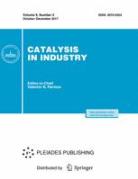
Makaryan I.A., Sedov I.V. Technologies for the production of polymer materials by the method of catalytic conversion of CO2 and epoxides. Kataliz v promyshlennosti. 2026;26(1):24-55. (In Russ.) https://doi.org/10.18412/1816-0387-2026-1-24-55
 Email this article (Login required)
Email the author (Login required)
Email this article (Login required)
Email the author (Login required) 
"KALVIS" LLC
Russian Federation, 119049,
Moscow, P.O. Box 28
E-mail: ctls@kalvis.ru
Processing of personal data





